The Scientific Gamer
Science, gaming, and all things in between.

Category Archives: gaming
Battling Boardom: Deck Builders, Part Two.

Being the second half of a roundup of the various deckbuilding games you can buy these days. First half here.
This half of the piece was supposed to segue straight into A Few Acres Of Snow and Thunderstone, but in the light of a recent horrifying experience I had I’d like to amend today’s agenda. Before we talk about the good deck builders I’d just like to devote a few column inches to a Five Minutes’ Hate of a game I had the misfortune to play last weekend called Quarriors.
Ultima VII Odyssey: The Revolution Starts Here.

Never have I been so disappointed on entering a building as I was when Cate went inside the National Branch. Rather than a bank filled with all sorts of stealable valuables, it turns out instead to be Scientology Central where the head of the Fellowship, Batlin, lives.
Talking to him is predictably boring, but Cate does get one useful bit of information: Elizabeth and Abraham, two cultists – can I call them cultists yet? – who deal with the organisation’s money and who were up to entirely unsuspicious activities in Trinsic the night before the murder, have passed through Britain en route to somewhere else called Minoc. Next stop Minoc then, I guess.
In Praise Of: Bungie Software, Part Two.
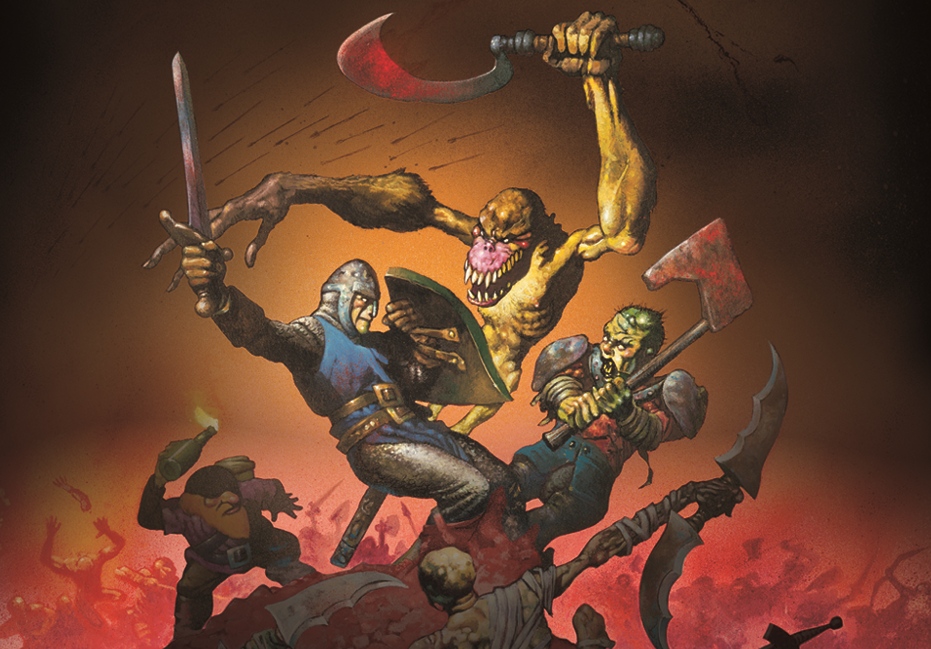
This finishes up my history of Bungie during the pre-Halo years; the first part can be found here.
Part Two: Myth.
Myth is a game that is remembered for all the wrong reasons. I suspect this is at least partly down to a marketing misstep on Bungie’s part, as it was the first ever 3D strategy game and that was the element they subsequently played up in all the previews. This was a mistake; the 3D in Myth is kind of janky and horrible and doesn’t really add much to the gameplay, and what’s more the game uses 2D sprites to represent its units which doesn’t exactly help it in the looks department. As a result the first Myth game was critically panned1 as a failed experiment. Some of that criticism is fully deserved – Myth’s gameplay is, to me, a fascinating tactical challenge, but I can easily see how it would have provoked feelings of revulsion in reviewers used to the Command & Conquer RTS paradigm – but I would be willing to bet a fair amount of money that those critics didn’t get too far into the game before dismissing it out of hand. Because, once again, Bungie have turned what is otherwise a merely fairly solid game into far more than the sum of its parts through the addition of a well-told story.
Thoughts: Sonic the Hedgehog 4.

For anyone born into the heady days of the early nineties, playing Sonic 4 is kind of like returning to your family home after a long absence only to find it populated by complete strangers. They say they know you. They say they’re your family. They say please put the knife down, you’ll hurt yourself. And then they say BLEEP BLOOP as you cut away their human-looking exterior to reveal the unfeeling robot automata beneath. Sonic 4 is a clinical, emotionless replica of the original games, an experience utterly devoid of any warmth or vital spirit. It’s the sort of game you’d expect to see if there was a race of intelligent aliens out there who had quixotically decided to make a Sonic sequel fifteen years after the last “true” instalment in the series – all the parts are there and they’re all working as you’d expect, but the end product is fundamentally wrong on a level so subtle you can’t define it.
Sunday Soundtracks.
http://www.youtube.com/watch?v=MZzPZA8VFas
Battling Boardom: Deck Builders, Part One.
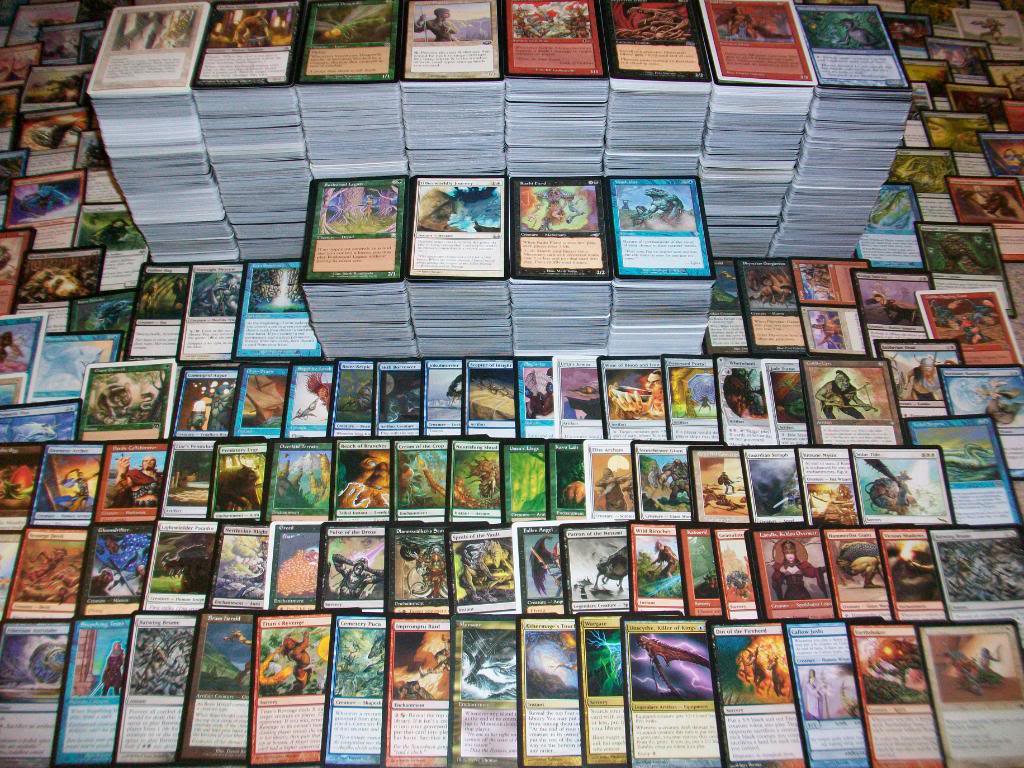
This is the beginning of an infrequent column on board games. It won’t be weekly like my other stuff since I’m nowhere near as sure of myself as I am when I talk about video games or science, and since I tend to only play individual games once or twice it’s tricky to assess whether they’re good or not. This makes it rather hard to come up with decent material for a column, so I’ll only publish them as and when I can think of something to write about.