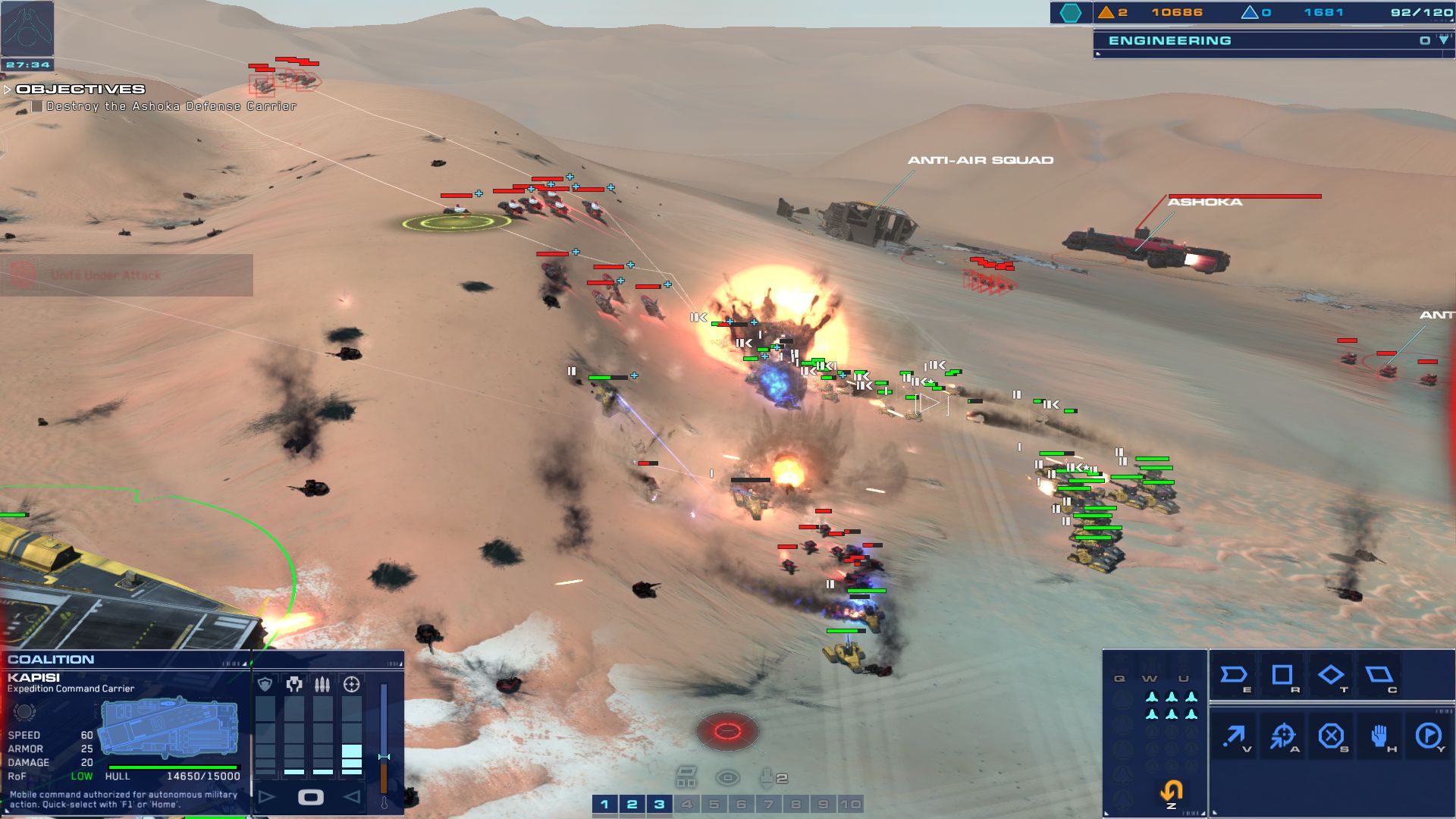
AKA Circle-Strafe Simulator 2016.


If you’ve been on the internet for a little while you might remember semi-ancient Flash game Pandemic, which was released onto the world wide web nearly a decade ago now. It was a game where you controlled a virus with the aim of infecting (and eventually killing) the entire world’s population through evolving a plethora of nasty symptoms and transmission abilities. Pandemic was a minor sensation at the time, consuming a couple of afternoons that I really should have spent working on my Ph.D and giving rise to the now-decomposing Madagascar/”SHUT. DOWN. EVERYTHING” memes. It was popular enough that I am not particularly surprised that someone has tried to make a proper game out of it, for that is what Plague Inc: Evolved is. I am surprised, however, that so little has changed between the Flash version and this paid-for product, because when you get right down it they are exactly the same goddamn game.
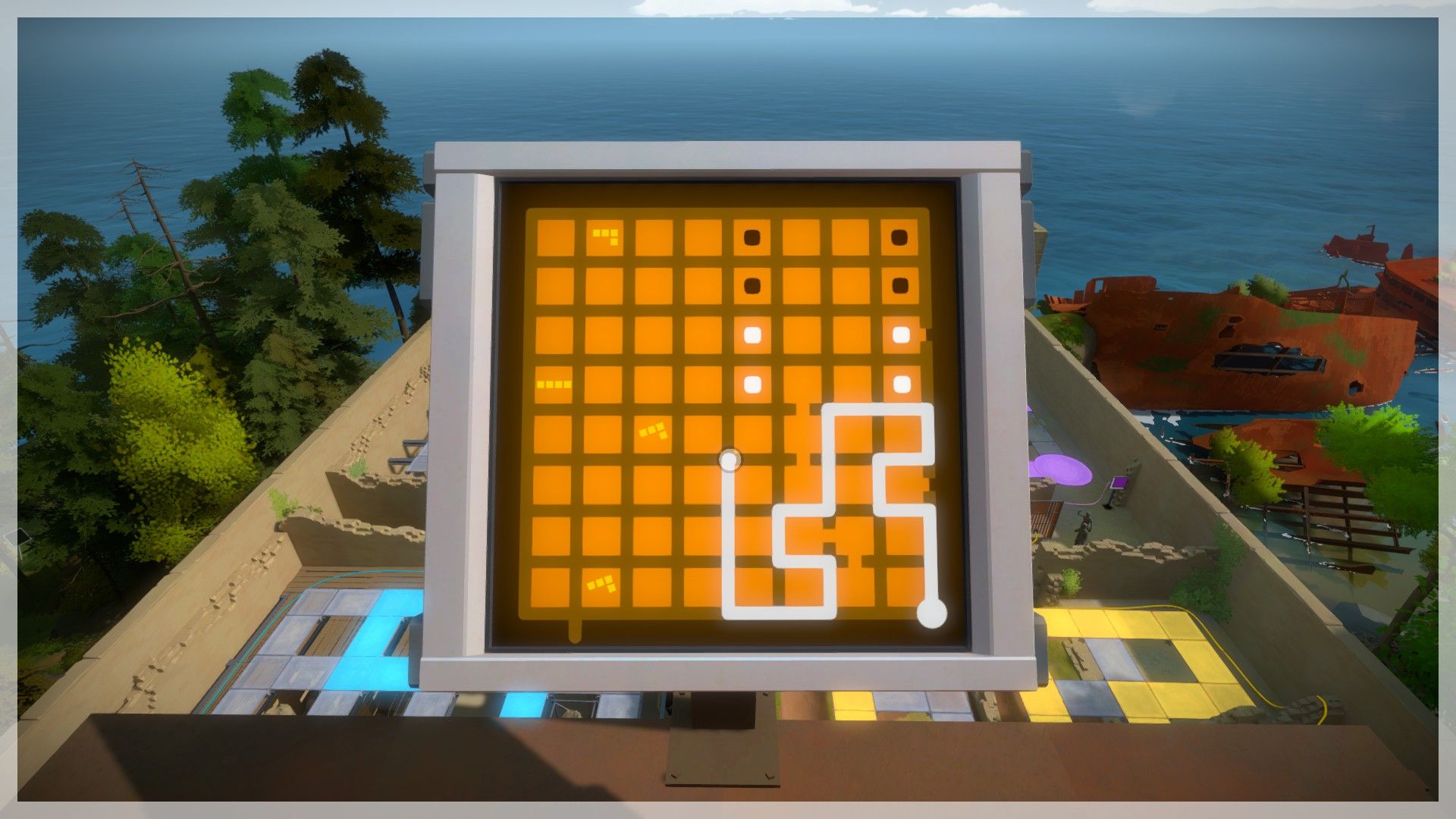
Usually I divide my puzzlers into distinct categories. On the one hand you have your SpaceChems and your Infinifactories; these are games that present you with a set of tools and then leave you to figure out what you have to do in order to hit the target output. On another, you have the Talos Principle. If Infinifactory was a question of “What?”, then The Talos Principle is a question of “What else?” in that you have a set of items that have known uses, but solving each puzzle is usually a matter of making a mental leap and coming up with a new, outside-the-box way of combining those items to reach the goal.
Now, though, we have The Witness. It is the first puzzler I have played in a long, long time that didn’t fall into either of the above broad categories. Instead, The Witness is in one all of its own; a category aptly labelled “What the fuck?”

Something “funny” that just happened: I got 1,200 words into writing a review of Firewatch before realising that it is Campo Santo’s first game and that they didn’t make 2013 house-exploration simulator Gone Home first. This is annoying for two reasons: first, I just wasted like forty-five minutes writing a bunch of words I can’t use; and second, I don’t think I can review Firewatch now. Not fairly, anyway, since while I was playing it my reactions were being shaped by certain things Gone Home did and didn’t do, and I don’t think I would have treated it the same way if I’d known it was an independent product rather than a followup. Long story short, Firewatch relies on two strengths: its looks, which are unfailingly pretty if a little technically limited; and its story. I thought I knew the bounds of where the game would go with that story based on Gone Home; instead I was very badly mistaken and anything could have been possible, and I think that element of uncertainty would have materially changed my impression of the game. Unfortunately without access to some sort of mind-wiping device I can’t go back and re-experience Firewatch’s story for the first time, so I think a fair review is now out of the question.
Instead, let me give you a one-paragraph opinion: Firewatch is an at-times maddeningly basic game with good writing that touches distressingly on the messy fact that real life is complicated and that unpleasant things can happen to the best of people for no good reason. Most games (and most media, for that matter) refuse to acknowledge this at all, and it’s refreshing to play something that tells a real, human story; Firewatch is valuable because it’s one of a very small minority of games that takes the time to do this in an intelligent and sensitive way rather than falling back on tired old tropes and relying on more fantastical elements of the setting to carry the player’s interest through to the end. It’s only three hours long — and that’s padded out by having you backtrack across the map several times — but it’s definitely a worthwhile experience nonetheless.
(I still think Gone Home did it better, though.)

About six months after my glowing review of the original XCOM reboot I wrote a followup piece that comprehensively laid into the game for flaws that had become apparent on subsequent playthroughs. The aliens’ completely passive presence on the geoscape. The introduction of new, tougher enemy types being linked to your completing plot missions that had no time factor involved, allowing you to game the system by researching endgame weapons and armour before tackling any of them. An inverse difficulty curve where the first three months of the game were by far the hardest as you desperately tried to keep your rookies alive with only basic weapons and equipment. A whole host of paper tiger systems (such as panic), where the various NPCs screamed at you to play the game in a certain way in an attempt to mask the fact that playing slowly and cautiously — and liberally vomiting explosives anywhere in direct contravention of Vahlen’s instructions — would result in flawless completion of 95% of missions. The Enemy Within expansion pack alleviated some of these flaws, but it couldn’t fix the worst of them as they were baked into the very structure of the game itself. Any trulycomprehensive cure would require a complete restructure of XCOM’s systems that only a sequel could provide.
08/02 – I’m halfway through the XCOM 2 review and it’s shaping up to be a monster, so I’m postponing it to tomorrow so that I can a) finish it and b) get some screenshots that aren’t of the late game.
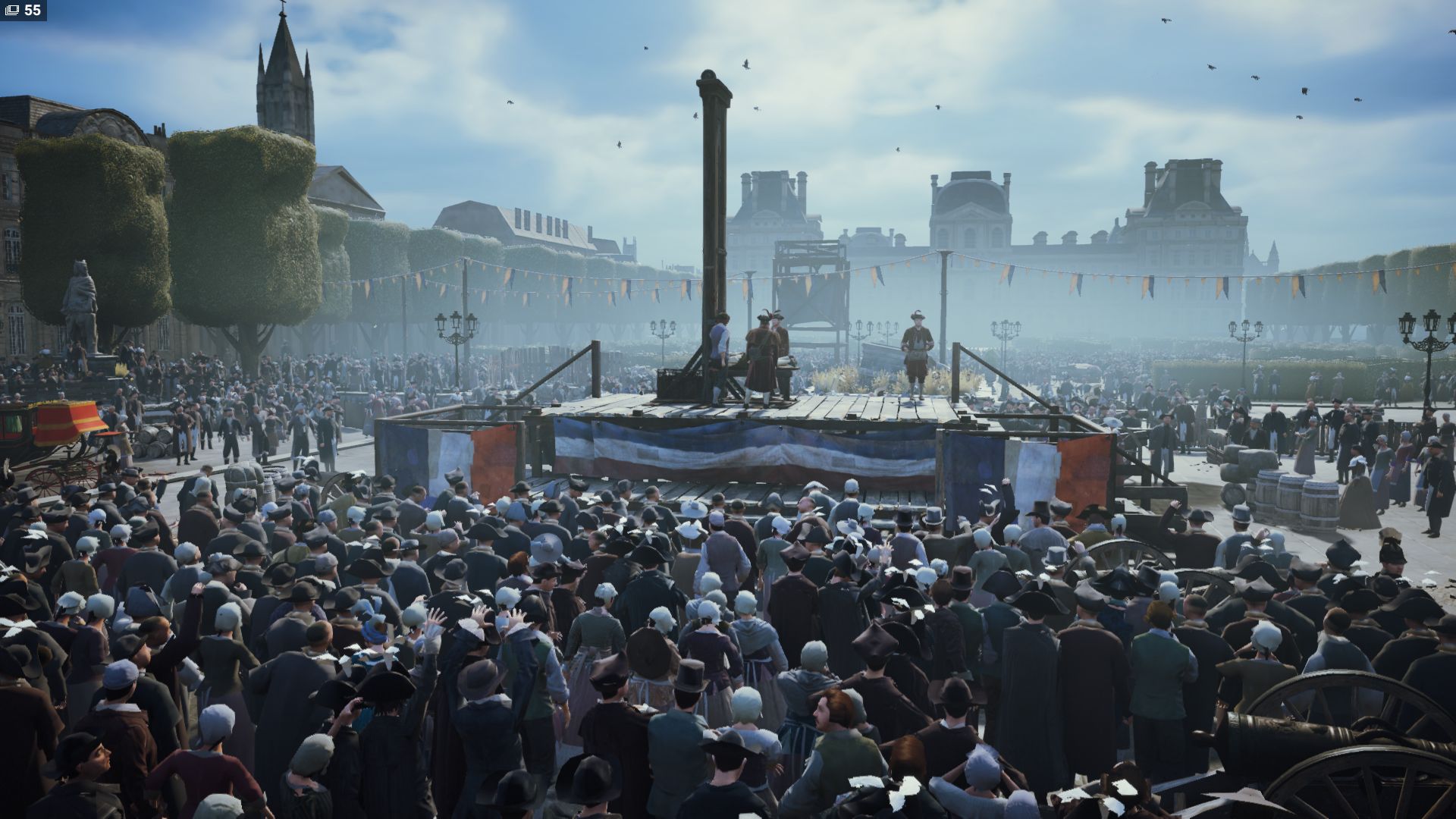
So I guess it’s admission time: I would not have had anywhere near as positive an opinion of Assassin’s Creed: Rogue as I did if I hadn’t immediately gone on to play Assassin’s Creed: Unity afterwards. Rogue is a great game, don’t get me wrong, but it wasn’t until I experienced the series debacle that is Unity that I realised I’d been taking a lot of the good stuff Rogue was doing completely for granted. It turns out there’s a hundred little things about Black Flag and Rogue — from the ease of the movement to the speed of the combat (even if it is a bit button-mashy) to the sheer sense of freedom that having a ship gives you — that you don’t notice until they’ve been replaced with clunky, regressive mechanics that take the AC series back at least five years to a time when it was far weaker as a game and was coasting largely on the strength of its history porn and a charismatic main character. This was fine when the star of the series was Ezio and the games were all set in Renaissance Italy (and Constantinople) and abused the historical elements of that setting in a particularly egregious yet crowd-pleasing way. It’s less fine when you have a lead with all the charm of a particularly smart-ass 12 year-old; a locale that, while not inherently dull, is something that Unity summarily fails to do anything even remotely interesting with; and an additional half-decade on the clock that means your game comes across as a relic from the very historical time period it is supposed to be set in.